Animals with the Best Sight: A Comparative Study
Introduction
Vision is one of nature’s most powerful tools, shaping how animals find food, avoid danger, and interact with their surroundings. Across the planet, countless species have refined their eyesight to levels that far exceed our own. This article highlights some of the most impressive visual systems in the animal world and explains how each adaptation helps its owner thrive in often-challenging environments.
The Evolution of Vision
Eyes have appeared in many separate branches of life, each time molded by the daily pressures of survival. Whether the task is spotting tiny prey against a bright sky or navigating star-lit forests, natural selection has produced an array of eye designs that turn light into life-saving information. Over eons, these structures became more complex, more sensitive, or more specialized, giving their owners a decisive edge.
The Top 5 Animals with the Best Sight
1. Bats
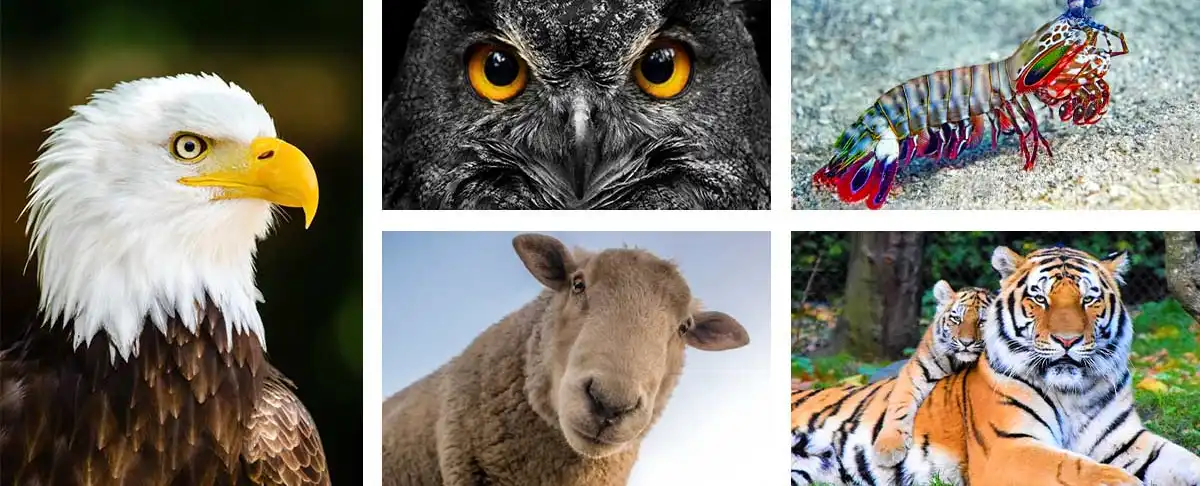
Although famous for echolocation, bats also possess eyes finely tuned to dim light. A high density of rod cells and a reflective layer behind the retina, the tapetum lucidum, give them a second chance to capture every photon. On moonless nights, this optical boost lets them dodge branches and track insect silhouettes against the sky.
2. Humpback Whales
In the blue twilight of the deep ocean, humpback whales rely on eyes the size of grapefruits. A tightly packed mosaic of photoreceptors grants clear vision even hundreds of meters below the surface, where color fades to shades of gray. This clarity helps them read body language during cooperative feeding and long migrations.
3. Owls
Owls turn darkness into opportunity. Tubular eyes packed with rods and coated with a mirror-like tapetum grant extraordinary night sensitivity. Because the eyes cannot rotate, a flexible neck swivels to sweep the scene. Combined with acute hearing, this silent surveillance system makes the owl a midnight specialist.
4. Eagles
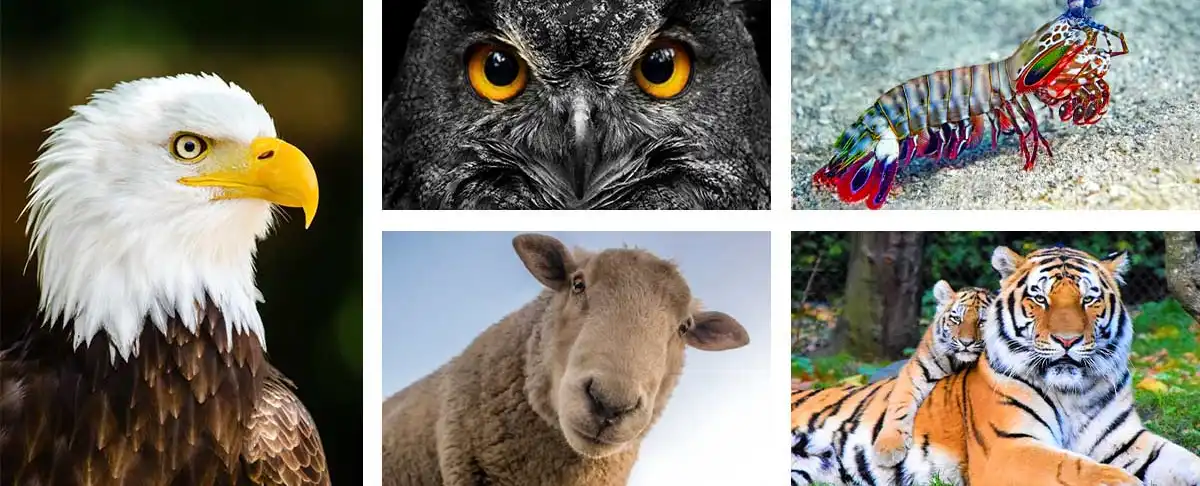
From soaring heights an eagle can spot a scampering hare or a glint of silver fish. The retinal center, the fovea, is both deeper and denser than in humans, magnifying distant details as if the bird carried built-in binoculars. Such range and resolution guide split-second stoops that rarely miss.
5. Humans
Human vision trades super-zoom for versatility. A broad field of view, sharp central focus, and rich color discrimination—thanks to millions of cone cells—let us read subtle facial cues, judge ripeness of fruit, and create art. Our eyes may not match raptor range or owl night vision, but they excel at interpreting complex social and natural scenes.
The Advantages of Superior Vision
Sharp eyesight translates into everyday benefits:
– Efficient hunting and foraging: quick, accurate detection of food saves energy and time.
– Early predator detection: spotting danger sooner increases the odds of escape.
– Precise navigation: recognizing landmarks or star patterns guides safe migration across continents or oceans.
Conclusion
From bats that reclaim the night to eagles that rule the sky, exceptional vision underpins the success of these remarkable animals. Each species showcases a different solution to the universal challenges of life, reminding us that evolution is the ultimate innovator. By appreciating their eyes, we gain a clearer view of the endless creativity within the natural world.