


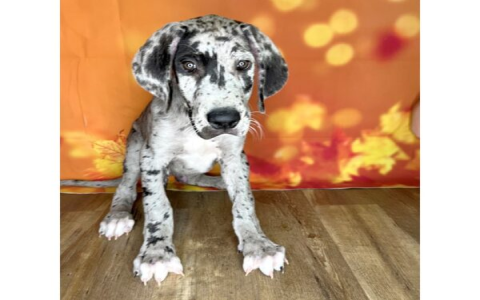
The Merle Great Dane Puppy: A Complete Overview
Introduction
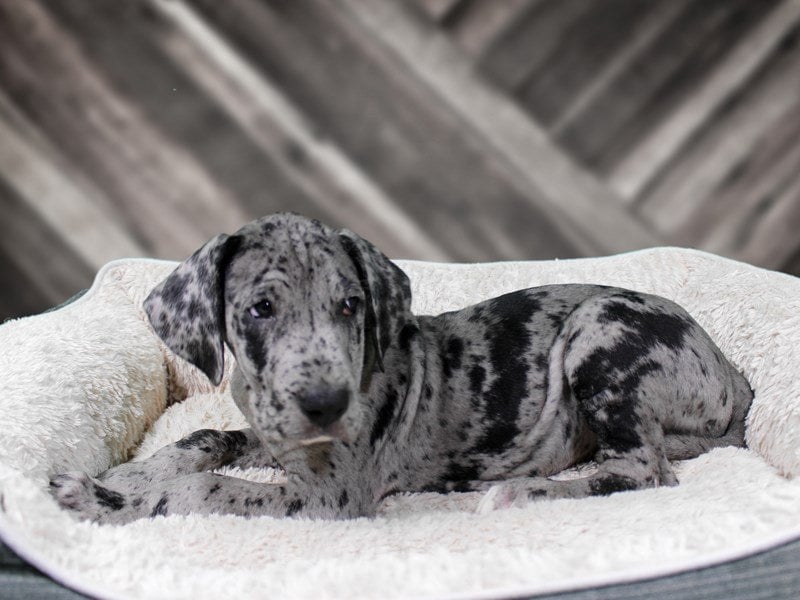
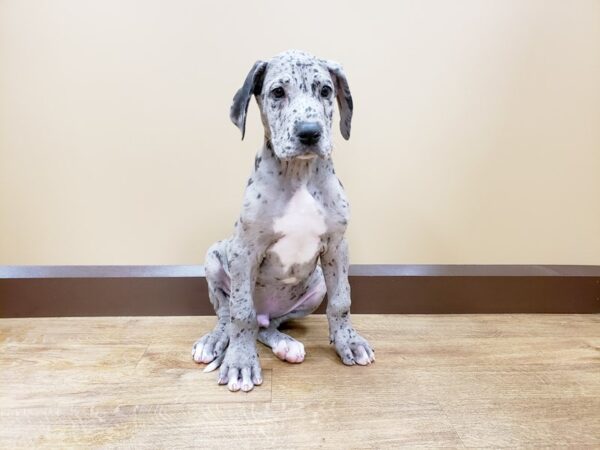
The merle-patterned Great Dane puppy turns heads wherever it goes. Its marbled coat and calm, friendly nature have made it a favorite among large-breed lovers. This guide walks you through the essentials—background, looks, personality, daily care, and why ethical breeding matters.
Origin and History
Great Danes trace back to Germany several centuries ago, first bred to track and hold big game. The merle version carries the same ancestry; the difference is a naturally occurring gene that scatters darker patches across a lighter background, giving the coat its signature swirled look.
Characteristics
Appearance
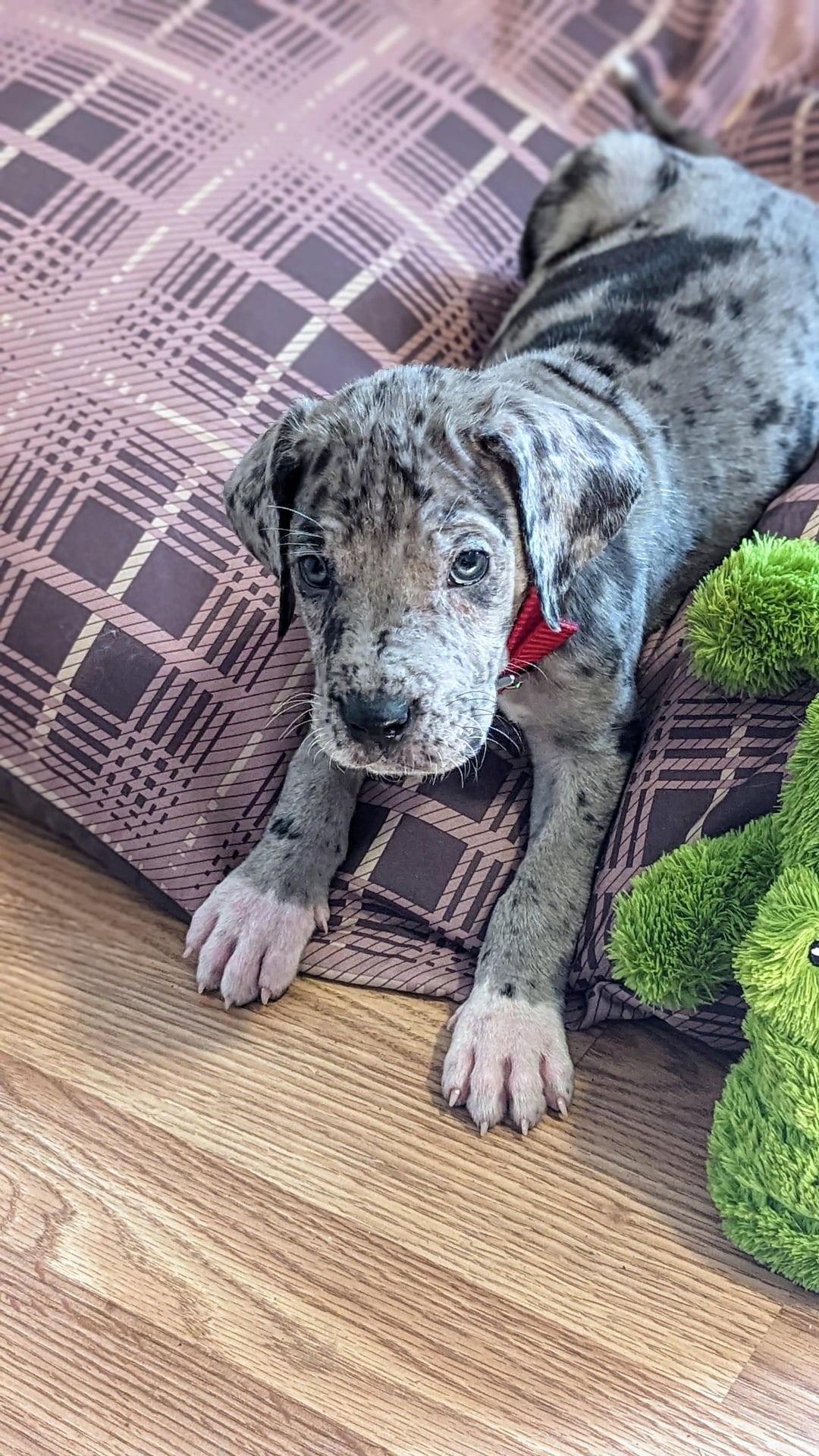
Beyond the eye-catching coat, a merle puppy is all classic Dane: tall frame, deep chest, long neck, and an overall athletic build. Each pup’s pattern is one of a kind—some show bold blotches, others a softer, misted effect.
Temperament
These dogs are gentle giants at heart. They bond quickly with family, enjoy human company, and respond well to patient training. Early socialization helps them stay confident and polite around strangers and other animals.
Care Requirements
Diet
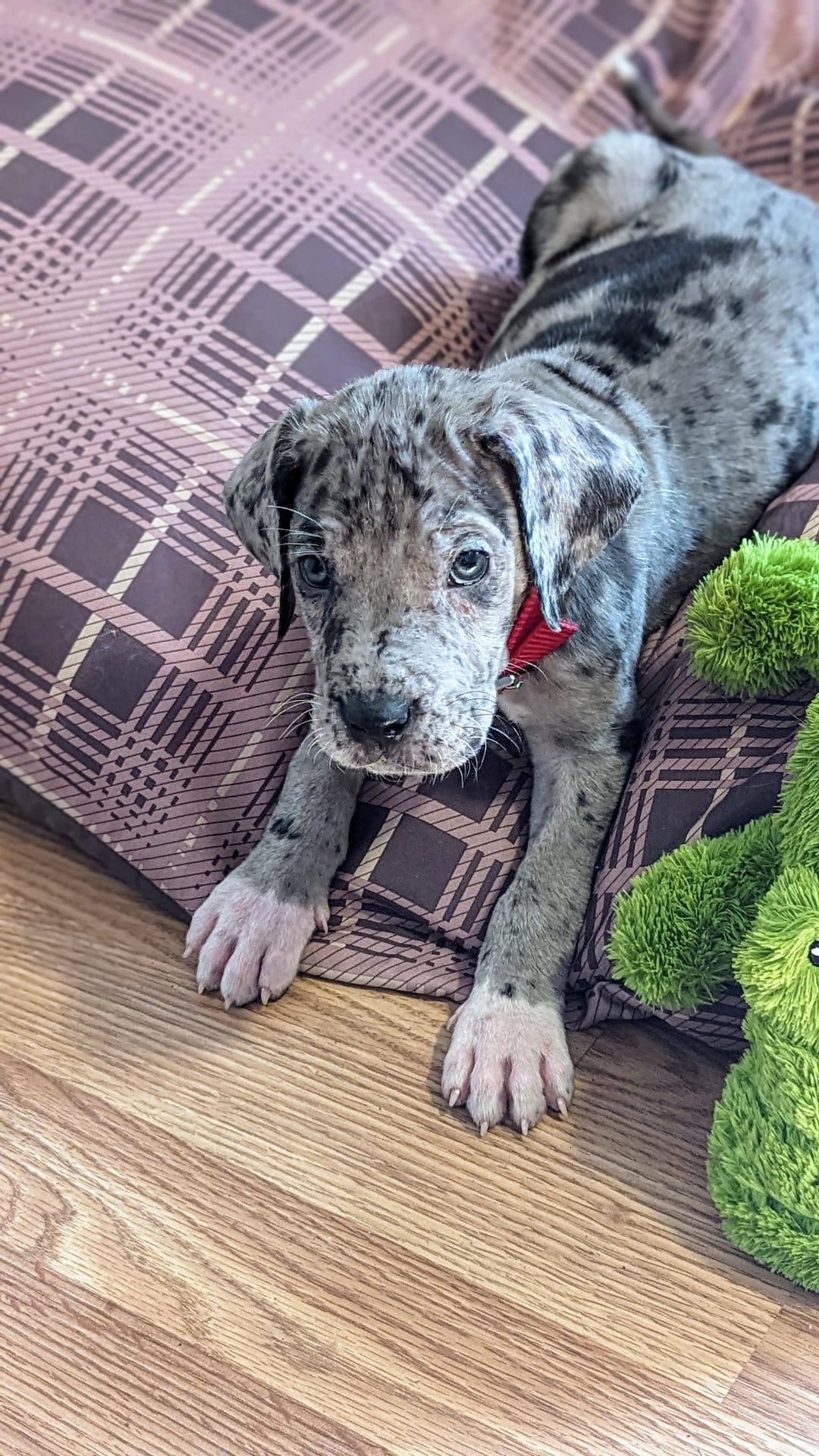
Rapid growth means quality food formulated for large-breed puppies is a must. Divide daily rations into several small meals to reduce the risk of bloat, and adjust portions as your vet recommends.
Exercise
Moderate, consistent activity keeps joints healthy and minds content. Leash walks, free play in a secure yard, and short training games work well. Avoid forced running or jumping on hard surfaces until bones mature.
Grooming
A quick weekly brush keeps the short coat shiny and removes dead hair. Bathe only when dirty; over-washing can dry the skin. Routine nail trims, ear checks, and tooth brushing complete the care routine.
Health Concerns
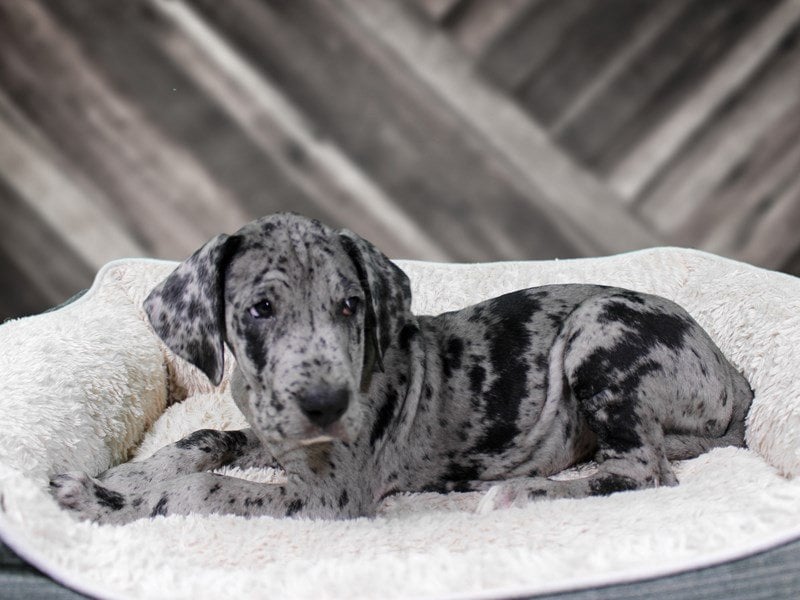
Merle Great Danes can inherit issues common to the breed and to the merle pattern:
Eye Disorders
Some merle dogs develop vision defects ranging from mild spots on the retina to more serious conditions. Annual eye exams can catch problems early.
Hearing Loss
The same gene that creates the coat pattern can affect inner-ear development. BAER testing in puppyhood confirms normal hearing or flags any deficits.
Joint Disease
Hip and elbow dysplasia remain concerns in large breeds. Keeping your dog lean, providing joint-friendly exercise, and following your vet’s screening schedule reduce discomfort and maintain mobility.
Responsible Breeding Practices
Healthy pups start with informed breeders. Key steps include:
Genetic Testing
DNA screening for color-linked disorders and common Dane ailments helps breeders pair only compatible, healthy parents.
Health Screening
X-rays for joints, heart auscultation, and eye checks should be repeated on breeding stock. Documentation should be shared openly with buyers.
Temperament Focus
Good breeders select for steady, friendly personalities, not just coat color. Meeting both parents—or at least the dam—gives you insight into future behavior.
Conclusion
A merle Great Dane can be a joyful, impressive companion when matched with an owner who understands giant-breed needs. Research breeders carefully, plan for lifelong healthcare, and prepare your home for a dog that will soon outweigh most humans. With the right start, your striking companion should offer years of gentle devotion and memorable moments.


